


AI tools can help create layouts, generate content and speed up website production, but they cannot fully replicate strategic UX design because they do not understand your customers, business goals or real-world decision-making in the same way an experienced designer can. Effective UX requires research, judgement, testing and context. AI can support that process, but it cannot replace the strategy behind a website built to convert.
For Australian business owners considering an AI website builder or using AI to redesign an existing website, that distinction matters.
AI can now generate impressive website interfaces in minutes. It can create page layouts, navigation, written content, imagery, forms and calls-to-action from a simple prompt.
But creating an interface is not the same as creating an effective user experience.
AI can generate the interface. Strategic UX determines whether that interface actually works for the people using it and the business behind it.
Strategic UX Starts With the User, Not the Interface
Good UX design does not begin by deciding where a button should go or which homepage layout looks best.
It begins by understanding the people who will use the website.
Who are they? Why are they visiting? What are they trying to achieve? What information do they need before making a decision? What might cause them to hesitate or leave?
These questions shape the entire website experience.
A potential customer looking for a trades service may want reassurance, service availability and an easy way to request a quote. Someone comparing professional services may need detailed information, proof of expertise and a clearer understanding of the process before making contact.
An AI tool can generate layouts for both businesses.
Strategic UX determines why those layouts should be different.
That is because effective user experience design considers the real customer journey rather than relying only on common website patterns.
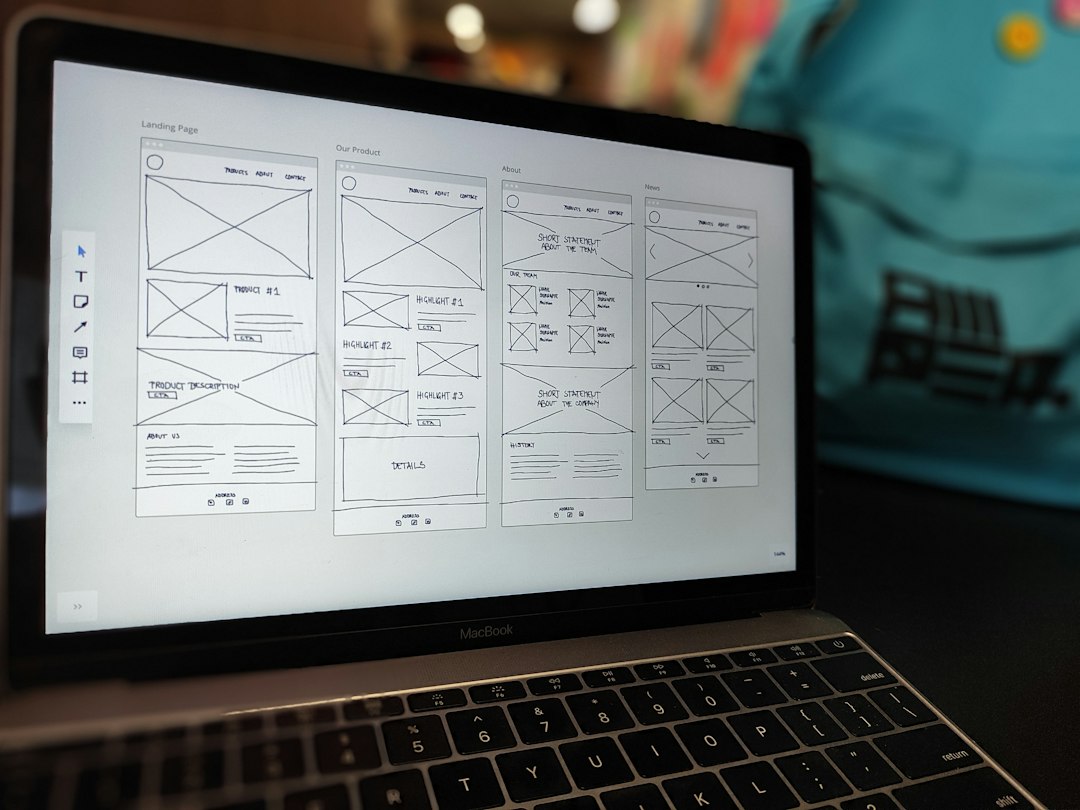
Good UX Is About Making the Right Decisions
AI is very good at generating possibilities.
It can suggest different layouts, multiple calls-to-action, new content sections and alternative page designs almost instantly.
The challenge is deciding which of those options actually make sense.
Strategic UX asks questions such as:
- What should visitors see first?
- Which information is most important?
- What could be creating confusion?
- Should pricing appear early or later in the journey?
- Does a visitor need more information before being asked to enquire?
- Is the website giving users too many choices?
- Which call-to-action best supports the business goal?
These decisions go far beyond visual design.
They determine how easily users understand your website, how confidently they move through it and whether they eventually take action.
That is why conversion-focused web design relies on strategic judgement, not just attractive layouts.
AI Can Identify Patterns, But Context Still Matters
AI can analyse large amounts of information and recognise common user behaviour.
That can be extremely useful.
But data without context can easily lead to the wrong conclusion.
Imagine that one of your service pages receives consistent traffic but generates very few enquiries.
A simple analysis might suggest adding another CTA, shortening the enquiry form or changing the page layout.
But the underlying issue may have nothing to do with the form.
Visitors may not clearly understand your service. The page may not provide enough trust signals. Important information may appear too late. Your SEO targeting may be attracting the wrong search intent. Or users may not yet have enough confidence to contact the business.
Strategic UX looks beyond the surface-level metric.
It brings together information from sources such as:
- Website analytics
- Search behaviour
- Heatmaps
- Customer feedback
- Enquiry data
- Conversion performance
- Usability testing
The goal is to understand why something is happening before deciding what should be changed.
AI can help process the evidence.
Human expertise provides the context needed to interpret it.
Strategic UX Is Also About Knowing What to Remove
One of the biggest strengths of AI is its ability to create more.
More copy. More sections. More design ideas. More options.
But better UX often comes from doing the opposite.
A business website can quickly become difficult to use when every service, benefit, promotion and message competes for attention.
Strategic UX creates hierarchy.
It decides what deserves prominence, what can appear later and what may not need to be there at all.
For example, visitors should not have to work through five competing calls-to-action before understanding what you want them to do.
Nor should they have to read every detail about your business before finding the information relevant to their problem.
Effective website usability comes from prioritising information and reducing unnecessary friction.
That requires understanding both the customer and the commercial objective behind the page.
UX Connects Customer Needs With Business Goals
A successful website has to work from two directions.
It needs to help users achieve what they came to do, while also helping the business achieve a measurable outcome.
Your customer may want to understand whether a service is suitable.
Your business wants a qualified enquiry.
A potential buyer may want to compare several options.
Your business needs to communicate why its solution deserves consideration.
Strategic UX brings those needs together.
It also connects the website with the wider digital marketing strategy.
Someone arriving through an informational Google search may still be researching and need educational content before they are ready to enquire.
Someone clicking a high-intent Google Ad may already know what they want and need a clear, direct landing page.
A returning visitor may need quick access to a particular service or contact option.
These journeys should not all be treated the same way.
Strategic UX helps shape the website architecture, page structure, content hierarchy and conversion pathways required for each one.
This Is Where AI-Generated Websites Can Fall Short
An AI-generated website may look modern and technically complete.
It can contain the right sections, attractive visuals and all the expected website elements.
But if those elements are based on generic patterns rather than your actual audience, the result can still feel generic, confusing or ineffective.
The issue is not whether the website looks professional.
The issue is whether it answers the right questions in the right order and makes it easy for your customers to move forward.
That becomes especially important if you expect your website to support:
- Search engine optimisation
- Lead generation
- Google Ads
- Online sales
- Customer acquisition
- Competitive positioning
- Long-term business growth
At that point, the website needs more than an interface.
It needs a strategy.
AI Still Has an Important Role in Web Design
None of this means AI should be avoided.
In fact, AI can significantly improve the web design process when it is used in the right way.
It can support:
- Research and idea generation
- Content drafting
- Early design exploration
- Prototyping
- Layout variations
- Data analysis
- Repetitive production tasks
This can make website projects faster and more efficient.
But the value comes from combining that speed with human direction.
AI can generate possibilities. Strategic UX determines which possibilities are worth using.
That relationship is more useful than treating AI and professional web design as competing alternatives.
Why Strategic UX Still Matters for Business Growth
Your website is not simply something people look at.
It is part of how potential customers experience your business.
They use it to understand what you offer, assess whether they trust you, compare their options and decide whether to take the next step.
If the experience is confusing, generic or difficult to navigate, even a visually impressive website can lose opportunities.
Strategic UX helps align every important website decision with a purpose.
It can improve navigation, clarify messaging, reduce friction, strengthen trust and create more natural pathways towards enquiries, bookings or purchases.
The value is not simply better design.
It is a website that works more effectively as part of your business.
Combine AI Efficiency With Strategic Web Design
At DGreat Solutions, we see AI as a valuable tool within the web design process, not a replacement for strategy.
Our web design services focus on creating responsive, user-friendly and conversion-focused websites that support both your customers and your wider business objectives.
We consider UX, website structure, content, SEO, conversion pathways and digital marketing together so the website is not designed in isolation.
AI can help accelerate parts of the process.
But strategy determines what should be built, how information should be prioritised and how the website should guide people towards meaningful action.
Build a Website That Works for Your Customers and Your Business
If you are considering an AI-generated website or planning to redesign your current site, look beyond how quickly an interface can be created.
Ask whether it understands your audience.
Ask whether the structure supports your marketing.
Ask whether it makes the customer journey easier.
And most importantly, ask whether it is helping your business achieve the outcomes you need.
DGreat Solutions can help you build a professional website that combines strategic UX, SEO and conversion-focused web design with modern technology.
Learn more about DGreat Solutions Web Design or get in touch with our team to discuss a website designed around your customers and your business goals.
Frequently Asked Questions
Can AI replace a UX designer?
AI can support many parts of the UX process, including research, content generation, prototyping and design exploration. However, strategic UX still requires context, judgement and an understanding of both customer behaviour and business objectives.
Can AI build a complete business website?
Yes. AI can generate layouts, content, navigation, imagery and other website elements. However, a technically complete website does not automatically provide a strong user experience or support your commercial goals.
What is strategic UX design?
Strategic UX design is the process of aligning a website’s structure, content and interactions with user needs and business objectives. It considers usability, customer journeys, information hierarchy, conversions and the overall purpose of the website.
How should businesses use AI in web design?
AI works best as a supporting tool. It can speed up research, ideation and production, while experienced designers provide the strategy and judgement needed to make sure the final website works for both users and the business.


